Hard schedules, solved.
Model timetables, rosters and fixtures as rules. TimelyNodes returns a schedule where no one is double-booked.
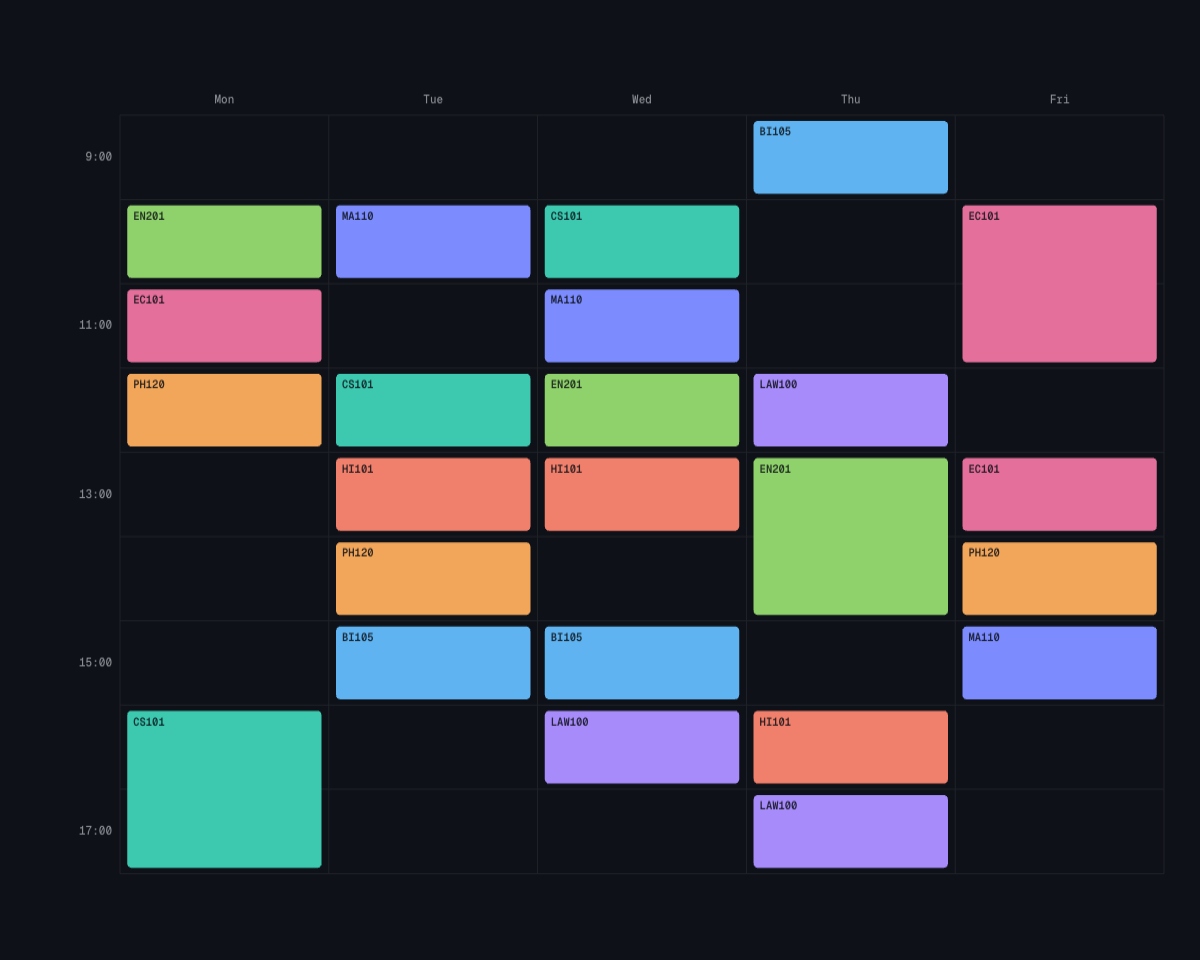
A schedule is a graph that settles.
-
Every session becomes a variable
A lecture, a shift, a match. Each one needs a time and a room.
-
Every rule becomes a constraint
No one in two places at once. Rooms big enough. Fridays kept light.
-
Every rule is weighed at once
Rules are balanced across the whole timetable until it settles, then a final check guarantees no clashes.
From a spreadsheet to a published timetable.
The engine solves. The operator portal is where a timetabling team does the rest of the job.
-
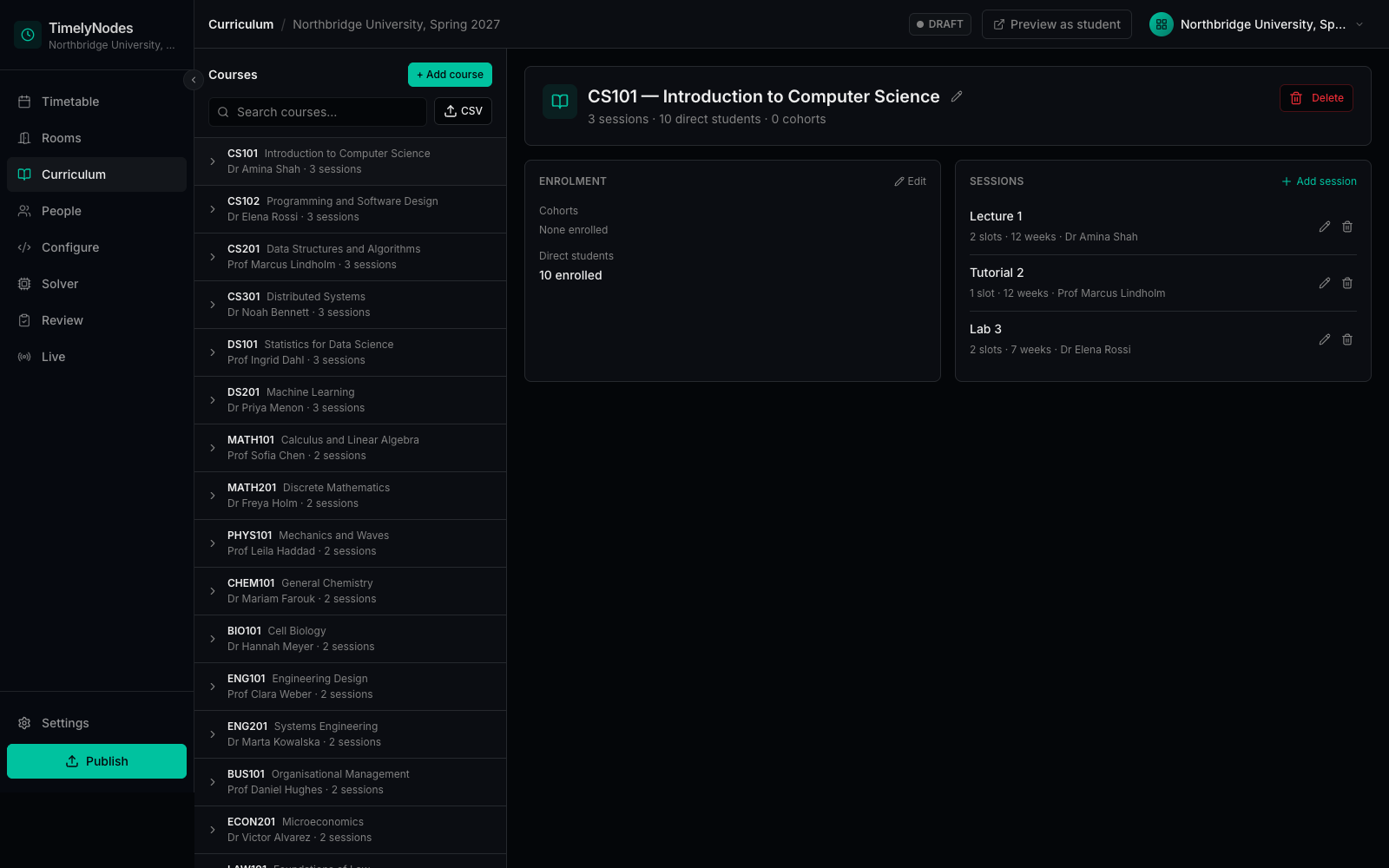
Import
Bring the data you already have
Upload rooms, courses, lecturers and students as CSV. Nothing to re-key.
-
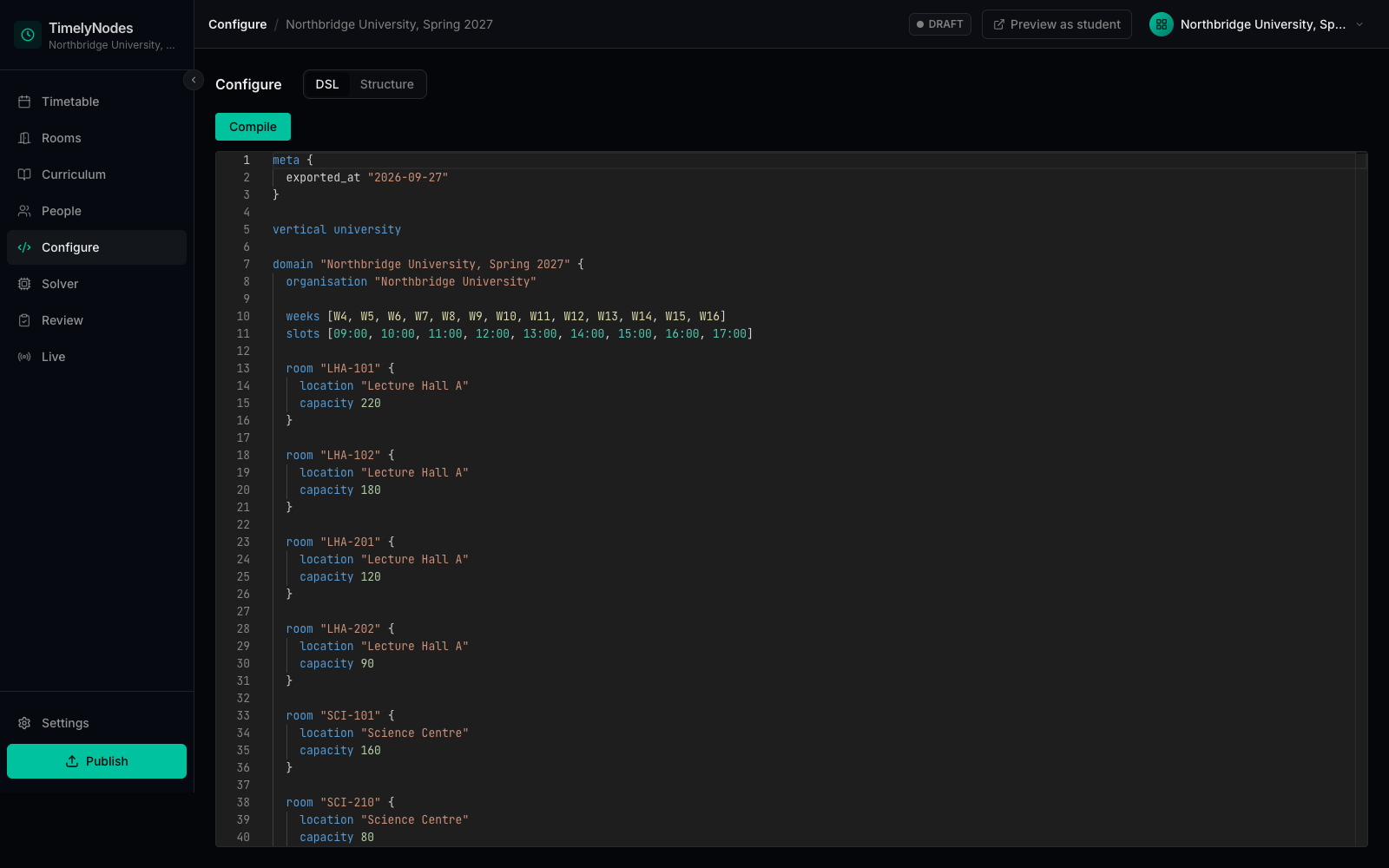
Configure
Write the rules down once
Rules live in a readable text file you can review and keep in version control.
-
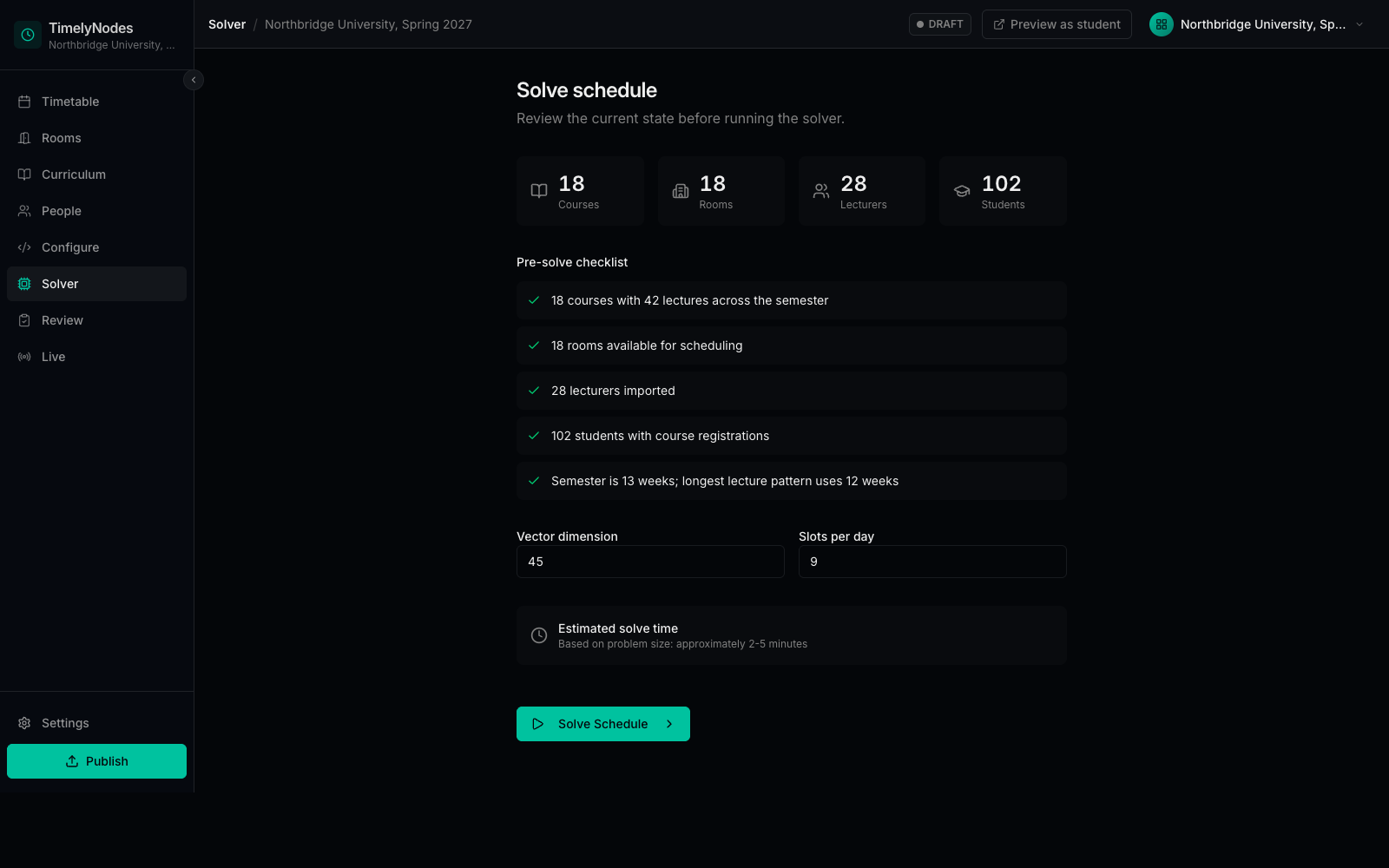
Solve
Check the inputs, then solve
A pre-solve summary flags missing capacities and unassigned courses before you spend a run.
-
Review and publish
See every session in its place
Review the timetable by week, room, lecturer or cohort before anything goes live.

-
Live
Every student gets their own week
A personal schedule on the phone and a calendar feed that stays in sync.

One engine. Many kinds of schedule.
One optimisation core, with a vocabulary for each kind of organisation. University timetabling is available now.
University course timetabling
Lectures, tutorials and labs across a semester, with reading weeks, alternate-week labs and a personal timetable for every student.
Clinical rosters
Shifts, skills and rest rules.
Talk to usSports fixtures
Venues, rest days and broadcast slots.
Talk to usConference programmes
Tracks, speakers and rooms.
Talk to usWhat is guaranteed, and what is optimised.
No student or lecturer is ever double-booked. Everything else is balanced by the weights you set.
Never allowed
A final check removes any clash before a timetable is returned, whatever else is traded off.
- No student is booked into two sessions at once
- No lecturer is booked into two sessions at once
Blocked times are priced out of reach as well, and have been honoured in every test we have run.
Optimised
Weighed against each other and satisfied as far as the timetable allows.
- Preferred and avoided times and days
- Room fit for class size
- Spreading, gaps and daily load
Built against the benchmark the field uses.
We test on International Timetabling Competition 2019 instances, real university data published for exactly this. One of them, in numbers:
Instance pu-llr-spr17, Purdue University, spring 2017. These are the problem sizes we work to, not a score. How we measure
What university IT asks us first.
Where does our data live?
Each customer gets its own database. Nothing is shared between institutions. Hosting region and arrangements are agreed per customer.
Do we have to replace our student records system?
No. Today data comes in as CSV exports you already produce. Direct integrations are something we build with pilot partners, for the system you actually run.
Can we get our timetable out again?
Yes: calendar feeds for every student and lecturer, a documented API, and a plain text export of your rooms, courses and rules.
How long does a solve take?
Minutes for a department, longer for a whole institution with many coupled rules. We will run your own data during a pilot and tell you the real figure rather than quote a best case.
What happens when something changes mid-semester?
You re-solve and publish a new version. Every published version is kept as a record, and students see the change in their calendar feed.
Do you build university timetables?
Tell us where today's tools fall short. About seven minutes, anonymous if you prefer, and participants get the findings.
Bring us your hardest timetable.
Walk through the demo on a sample university now, or book a session and we will set up a sandbox with your own data.